
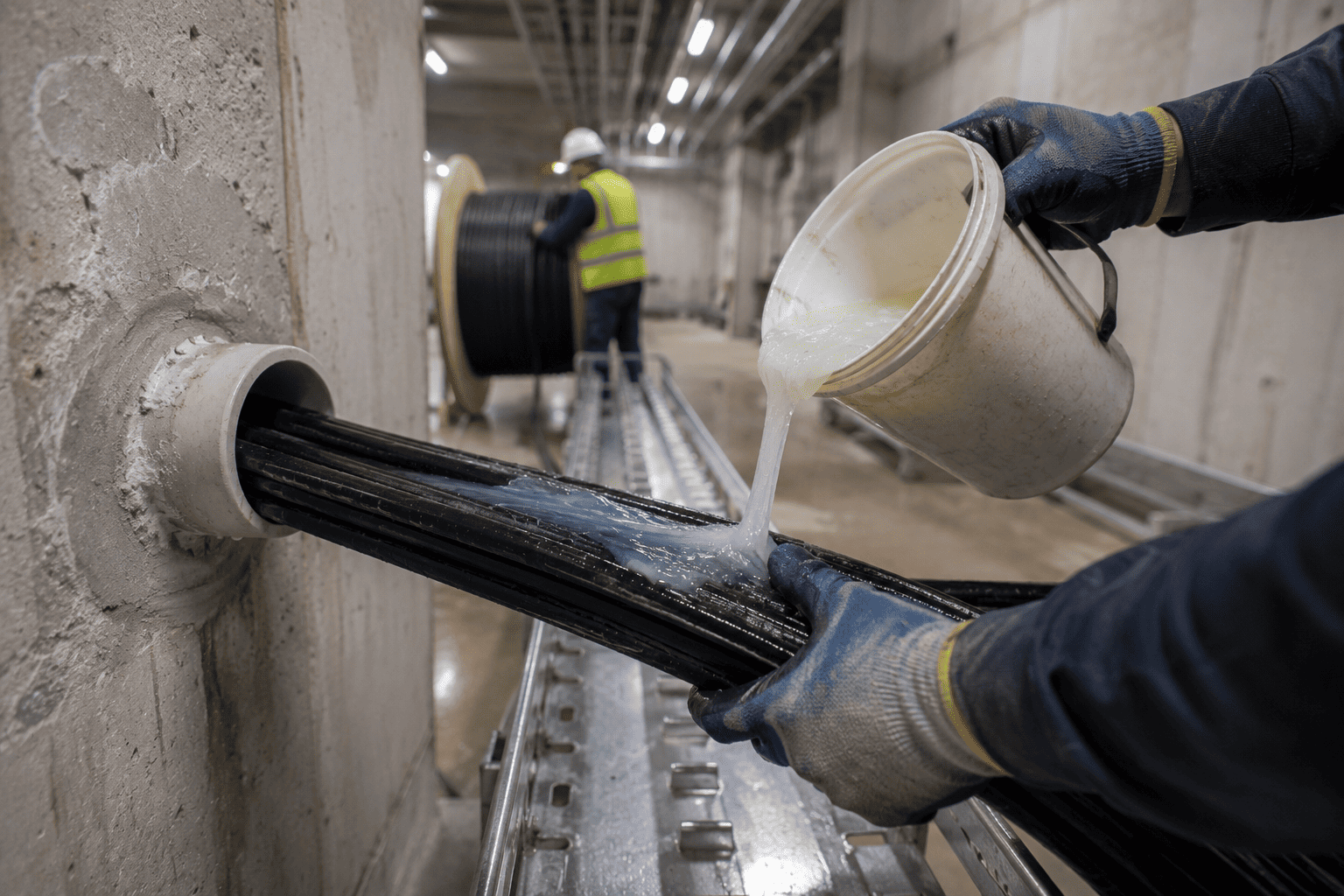
Anyone who has been involved in a large electrical installation project knows that pulling cables through long conduits isn't as straightforward as it sounds. On paper, it may seem like a simple task—feed the cable through the duct and connect it at the other end. In reality, friction, cable tension, bends, and environmental conditions can turn cable installation into one of the most challenging phases of a project.
This is especially true in large-scale developments across the UAE, where extensive power networks support commercial towers, industrial facilities, infrastructure projects, data centres, and utility installations. In these environments, even a minor issue during cable pulling can lead to damaged cables, costly delays, and additional labour expenses.
That is why experienced contractors and engineers rely on cable pulling lubricant as a critical part of the installation process.
The Hidden Challenge of Cable Installation
Modern construction projects require thousands of meters of electrical and communication cables. These cables often travel through long conduit systems that include multiple bends, vertical runs, and confined pathways.
Without proper lubrication, friction becomes a significant obstacle.
As cable tension increases, installers may encounter the following:
- Difficulty pulling cables through conduits
- Damage to cable jackets
- Increased labor requirements
- Higher risk of installation failures
- Delays in project completion
What appears to be a small problem can quickly affect project timelines and budgets.
What Is Cable Pulling Lubricant?
Cable pulling lubricant is a specially formulated product designed to reduce friction between cables and conduit surfaces during installation.
Unlike ordinary oils or greases, these lubricants are engineered specifically for electrical applications. They provide temporary lubrication during cable pulling while remaining compatible with cable insulation materials.
Most modern formulations are non-toxic, easy to apply, and designed to dry without leaving harmful residues.
For large projects, using the right lubricant can significantly improve installation efficiency.
Reducing Friction and Cable Tension
The primary function of cable pulling lubricant is simple: reduce friction.
When cables move through conduits, friction creates resistance that increases pulling tension. Excessive tension can stretch conductors, damage insulation, and compromise long-term cable performance.
Lubricants create a low-friction surface that allows cables to glide more smoothly through ducts and conduits.
This reduction in resistance offers several benefits:
- Easier cable installation
- Lower pulling forces
- Reduced equipment strain
- Improved worker safety
- Less risk of cable damage
For long cable runs commonly found in UAE infrastructure projects, these advantages are particularly valuable.
Protecting Cable Integrity
Electrical cables represent a significant investment.
Damage that occurs during installation may not always be visible immediately. Small abrasions, insulation defects, or excessive stress can create long-term reliability issues that surface months or even years later.
Using cable pulling lubricant helps protect cable jackets and insulation from unnecessary wear during installation.
This protection contributes to:
- Longer cable lifespan
- Improved system reliability
- Reduced maintenance requirements
- Lower risk of electrical faults
In critical facilities such as hospitals, airports, data centers, and industrial plants, maintaining cable integrity is essential.
Improving Installation Speed
Project schedules are often tight, particularly in large construction developments.
Installation crews are expected to complete work efficiently while maintaining quality and safety standards. Excessive friction can slow progress considerably, especially when pulling heavy power cables through complex conduit networks.
Lubricated cable installations typically require less effort and fewer adjustments during pulling operations.
As a result, teams can:
- Complete installations faster
- Reduce labor hours
- Improve productivity
- Meet project deadlines more effectively
For contractors managing large-scale projects, these efficiency gains can have a direct impact on profitability.
Supporting Worker Safety
Cable installation can be physically demanding work.
When excessive force is required to pull cables through conduits, the risk of workplace injuries increases. Workers may experience strains, fatigue, or accidents caused by sudden cable movement or equipment failures.
By reducing pulling tension, cable pulling lubricant helps create safer working conditions.
Installers can handle cables more effectively while minimising the physical effort required to complete the task.
This benefit is often overlooked but remains an important consideration for project managers focused on workplace safety.
Ideal for Large UAE Infrastructure Projects
The UAE continues to invest heavily in construction, transportation, renewable energy, utilities, and industrial development.
These projects often involve extensive underground and above-ground cable networks that require efficient installation methods.
Cable pulling lubricants are commonly used in:
Commercial Buildings
High-rise developments require complex electrical systems with long cable runs throughout the structure.
Industrial Facilities
Manufacturing plants and processing facilities often contain extensive conduit networks supporting power and control systems.
Renewable Energy Projects
Solar farms and renewable energy installations rely on large volumes of power cables connecting equipment across wide areas.
Infrastructure Developments
Transportation systems, airports, utilities, and telecommunications projects all benefit from smoother cable installation processes.
Industry Trends Driving Adoption
As electrical systems become larger and more sophisticated, installation efficiency has become increasingly important.
Several trends are contributing to the growing use of cable pulling lubricants:
- Expansion of infrastructure projects
- Increased use of larger cable sizes
- Greater focus on installation quality
- Improved workplace safety standards
- Demand for faster project completion
Contractors are recognizing that small process improvements can deliver significant operational benefits.
Choosing the Right Cable Pulling Lubricant
Not all lubricants are created equal.
When selecting a cable pulling lubricant, professionals should consider factors such as:
- Compatibility with cable insulation materials
- Performance under local environmental conditions
- Ease of application
- Residue characteristics
- Safety and environmental compliance
Choosing a product designed specifically for electrical installations helps ensure optimal results.
Final Thoughts
Successful cable installation is about more than simply getting a cable from one point to another. It requires careful planning, proper equipment, skilled labor, and the right supporting materials.
Among those materials, cable pulling lubricant plays a surprisingly important role. By reducing friction, protecting cable integrity, improving installation speed, and enhancing worker safety, it contributes directly to project success.
For contractors, consultants, and facility operators working on large-scale electrical projects in the UAE, investing in high-quality cable installation solutions can help improve efficiency and long-term system performance. To learn more about professional cable management and installation products, connect with experienced industry specialists who can recommend the right solutions for your specific project requirements.